Summary:
Most people who end up planning a community event didn’t exactly volunteer for the job. You got nominated at a PTA meeting, you raised your hand at church, or you’re the neighbor who finally said “someone should do something” about the block. Now it’s yours to figure out.
The good news is that with the right planning sequence, it’s completely manageable — even if this is your first time. This guide walks through what you actually need to do, in the right order, with the kind of local detail that matters when you’re working with Nassau County’s parks, schools, and municipalities. Let’s get into it.
Planning a Community Event Checklist: Where to Start in Nassau County
The biggest mistake first-time event organizers make is starting with the fun stuff — entertainment, food, decorations — before locking down the basics. Permits, insurance, and venue availability have hard deadlines. Entertainment vendors do not wait.
For most community events in Nassau County, you want to start the planning process at least 8 to 12 weeks out. If you’re expecting more than 200 people, coordinating multiple vendors, or using a Nassau County park, push that to four to six months. Nassau County Parks picnic area reservations open on March 4 each year, and popular dates — especially summer weekends — go fast.
Permits and Insurance: What Nassau County Actually Requires
This is the part that causes the most anxiety, and honestly, it shouldn’t. Once you know what you need, it’s just a checklist.
If your event is in a Nassau County park, you’ll need to submit the Special Events permit application to phood@nassaucountyny.gov using the county’s official checklist. This applies to walks, runs, fundraisers, fairs, scouting events, and most organized gatherings. For athletic field use, applications go to NCFields@nassaucountyny.gov on organization letterhead, and you’ll need to include proof of insurance.
Block parties that involve street closures are handled at the town level, not the county level. Nassau County is made up of three towns — Hempstead, North Hempstead, and Oyster Bay — plus the cities of Long Beach and Glen Cove. Each has its own process for street closure permits, so contact your specific municipality directly. Don’t assume what worked in Rockville Centre applies in Port Washington.
If you’re planning to use inflatables at a public event, the rental company you hire needs to provide a Certificate of Insurance — a COI — naming your organization as an additional insured. This is not optional. Schools, churches, and parks in Nassau County regularly require this documentation before they’ll allow inflatables on-site. If a vendor can’t produce one, that’s your answer right there.
Amplified sound typically requires a separate permit from local authorities. If you’re running generators, confirm requirements with your municipality ahead of time. These details feel small until the day of the event, when they suddenly aren’t.
One more thing: the permit process takes time. Submit applications as early as possible. Waiting until three weeks out to start this process is how events get derailed.
How to Vet and Coordinate Vendors for a Community Event
Vendor coordination is where most community events get complicated. You’re dealing with multiple companies, multiple delivery windows, and multiple points of contact — all while trying to run the actual event. The simplest way to reduce that complexity is to consolidate wherever you can.
Look for a vendor who can supply more than one thing. If the same company can deliver bounce houses, water slides, obstacle courses, tents, tables, chairs, and concession machines, you’ve just eliminated four separate vendor relationships. That’s four fewer confirmations to chase, four fewer invoices to process, and four fewer things that can go wrong on the day.
For any vendor you’re considering, ask three questions before you book. First: are you fully insured, and can you provide a COI with our organization’s name on it? Second: is your equipment commercial-grade, or residential? Third: will you have trained staff on-site, or is this a drop-off service? The answers tell you a lot. Commercial-grade inflatables are built to ASTM F2374 standards — they’re designed for repeated public use, with reinforced seams, built-in safety nets, and proper anchoring capacity. Residential units are not. At a school carnival or a community festival where hundreds of kids are cycling through the equipment all day, that distinction matters.
Also ask about weather policies before you sign anything. On Long Island, weather is always a variable. A reputable vendor will have a clear policy — they won’t set up in rain, high winds, or unsafe conditions, and they’ll work with you to reschedule without penalty if conditions turn. Get that in writing.
Finally, confirm setup and breakdown logistics. When does the vendor arrive? How much space does each piece of equipment require? Do they need power access? Do they handle their own breakdown, or do you? These questions feel tedious to ask upfront, but they prevent a lot of confusion on event day.
Fundraising Event Checklist for Nassau County Schools and Nonprofits
Fundraising events are their own category. The stakes are higher because you’re not just trying to have a good event — you’re trying to generate revenue. A well-run event with strong entertainment and good attendance can deliver a 3:1 to 4:1 return. A poorly planned one can cost more than it brings in.
Nassau County has 56 school districts, most with active PTAs running annual carnivals, fairs, and fundraising events. If you’re organizing one of these, the planning timeline and vendor selection process are the same as any community event — but the entertainment lineup carries more weight, because it’s what drives ticket sales and keeps families on-site longer.
What Entertainment Actually Works at School Carnivals and Fundraising Fairs
The entertainment mix you choose directly affects how long families stay — and how much they spend. A bounce house alone will keep younger kids busy for a while, but a full lineup of activities keeps families at your event for hours instead of thirty minutes.
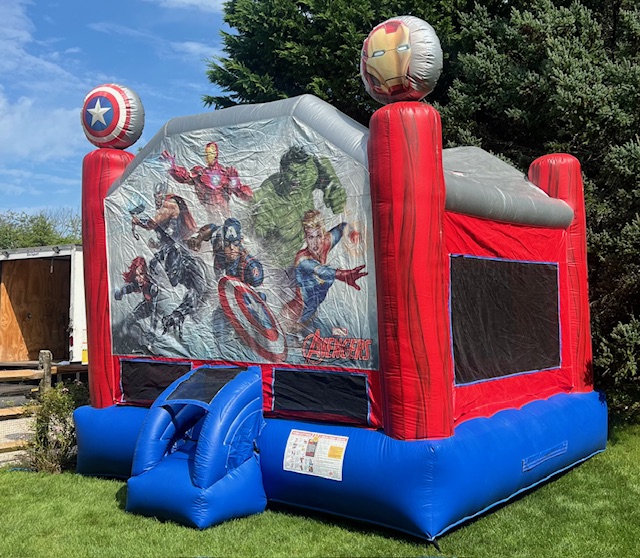
For school carnivals and fundraising fairs in Nassau County, the most effective setups combine multiple activity types. Bounce houses and combo units handle the younger kids. Obstacle courses bring in older kids and even adults who want to compete. Carnival game booths and dunk tanks create moments that people actually talk about afterward. Concession machines — popcorn, cotton candy, sno-cone — add revenue and atmosphere at the same time.
The key is thinking about your crowd across age groups. A lot of Nassau County school events draw families with kids ranging from five to fifteen, plus teachers, parents, and grandparents. If the entertainment only works for one age bracket, you lose half the room. Interactive games, inflatable movie screens for quieter moments, and even portable mini golf setups can round out the experience without overwhelming your budget or your footprint.
Speaking of footprint: before you finalize your entertainment lineup, map out your space. Know the square footage, the power access points, and any restrictions your venue has — especially if you’re using a school gymnasium, a church parking lot, or a Nassau County park field. A good vendor will help you figure out what fits and what doesn’t. That conversation should happen before you commit to a package, not after.
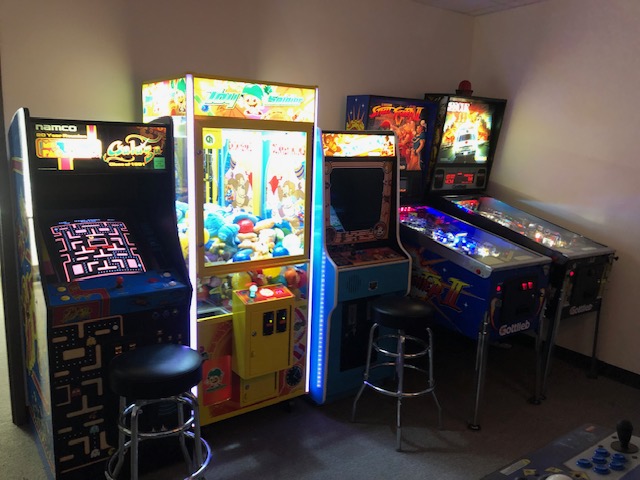
If you have corporate sponsors involved, branded entertainment options — custom-wrapped arcade machines, branded claw machines, or a sponsor-named mini golf hole — give sponsors visible presence at the event, which makes it easier to secure larger contributions in the first place.
Church Event Planning Checklist and Block Party Planning Checklist: What's Different
Church events and block parties share a lot of the same planning bones, but each has its own wrinkles worth knowing.
For church family days and community gatherings, the entertainment needs to work across a wide age range — young children, teenagers, adults, and seniors all in the same space. Family-friendly doesn’t mean boring. Obstacle courses are popular with kids and adults alike. Carnival booths and interactive games create natural gathering points where people actually talk to each other, which is usually the whole point of a church community event. The logistics are similar to any outdoor event: confirm your venue’s power access, get your COI from your entertainment vendor, and build a rain contingency into your plan from the start.
Block parties have their own specific requirements, particularly around permits. In Nassau County, street closure permits are issued at the town level. If you’re in Levittown or East Meadow, that’s the Town of Hempstead. In Manhasset or New Hyde Park, it’s the Town of North Hempstead. In Bethpage or Woodbury, it’s the Town of Oyster Bay. The process and timeline vary, so start that application early — some municipalities want 30 days’ notice, others want more. Don’t wait until the week before.
For both event types, entertainment scale matters. A block party on a residential street has different spatial constraints than a church parking lot event. Know your footprint before you start booking. Smaller inflatable units, carnival game booths, and concession machines tend to work well in tighter residential setups. Larger obstacle courses and water slides need more room and more lead time to confirm site feasibility.
One thing that applies to both: trained, on-site staff from your entertainment vendor makes a real difference at public events. When you’re running a block party or a church family day, you’re already managing a hundred things at once. Having vendor staff handling equipment supervision means you’re not also trying to watch the bounce house while greeting guests and managing the food line. For larger public events, this isn’t a luxury — it’s how the event actually runs smoothly.
Ready to Plan Your Nassau County Community Event? Here's Your Next Step.
The through-line in all of this is simple: start earlier than you think you need to, lock down permits and insurance before anything else, and choose vendors who make your job easier rather than harder.
Nassau County has a genuinely active community event culture — from block parties in Wantagh and Baldwin to school carnivals in Garden City and church family days in Valley Stream. The organizers who pull these off well aren’t necessarily more experienced than you. They just started the process with a clear checklist and found vendors they could actually rely on.
If you’re putting together a community event in Nassau County and want to talk through what entertainment setup makes sense for your space, budget, and crowd, reach out to us at The Big Bounce Theory. We’ve been doing this since 2007, we carry full insurance with COI availability, and we can supply everything from inflatables and games to tents, tables, and concessions — so you’re working with one vendor instead of five.