Summary:
You’ve been handed the field day assignment. Maybe you volunteered, maybe you got voluntold. Either way, you’re now responsible for keeping several hundred kids entertained, organized, and safe for an entire school day — and the clock is already ticking.
The hardest part isn’t finding game ideas. It’s finding ones that actually work for a kindergartner and a fifth grader on the same afternoon. That gap is wider than most people realize until you’re standing in the middle of a chaotic blacktop wondering why half the kids are crying and the other half are bored.
Here’s what we’ve seen work across Nassau County schools — and what makes the difference between a field day people talk about for weeks and one that quietly gets forgotten.
Field Day Games That Work for K–5 Without Splitting Your Event in Two
The station-rotation model is the single biggest upgrade you can make to a traditional field day format. Instead of running one activity for the whole school at once, you set up eight to twelve stations and rotate groups through them on a timer. Every grade level is active at the same time, the lines stay manageable, and no single activity has to carry the whole event.
The key is choosing activities that can be adjusted on the fly — games where younger kids can play a simplified version while older kids compete more seriously at the same setup. That’s the sweet spot, and it’s what separates a well-planned field day from one that only really works for one age band.
Classic Field Day Activities That Hold Up Across Grade Levels
Parachute games are one of the most universally effective field day activities out there, and they tend to surprise people with how well they land across every age group. Kindergartners love the visual chaos of watching balls bounce off the surface. Older kids get competitive about keeping the parachute moving in sync or trying to pop through the middle without getting caught. Games like Sharks and Lifeguards — where kids hidden under the parachute try to pull standing players down — work just as well with fifth graders as they do with first graders, which is rare.
Tug of war is another one that scales naturally. For younger grades, keep the teams small and the rope short. For third through fifth grade, you can add more players, introduce a mud pit or water balloon boundary in the middle, and suddenly it’s a whole different energy. The game itself doesn’t change — the stakes do.
Relay races are reliable, but they need some thought. A straight sprint relay works fine for upper grades, but younger kids can get confused by the handoff or lose track of the order. Swapping the baton for something physical — carrying a water balloon on a spoon, rolling a hula hoop to the next person, or passing a ball between their knees — keeps the task clear and the activity engaging regardless of age.
Sack races, three-legged races, and the classic egg-and-spoon relay all fall into the same category: easy to explain, hard to mess up, and genuinely fun to watch. They don’t require equipment that’s hard to source, and they work on a blacktop or a grass field.
Non-competitive station activities tend to perform better with younger grades than you might expect. A parachute game where everyone wins, a water balloon toss where the goal is just to keep it intact as long as possible, or a hula hoop challenge where kids try to beat their own personal record — these formats keep younger students engaged without the frustration of losing to an older kid who’s twice their size.
How to Upgrade Specific Stations with Rentals Without Overdoing It
There’s a version of field day that runs entirely on volunteer energy and borrowed gym equipment. It works. But there’s also a version where you bring in one or two rental pieces that completely change the atmosphere — and that version tends to be the one kids are still talking about in September.
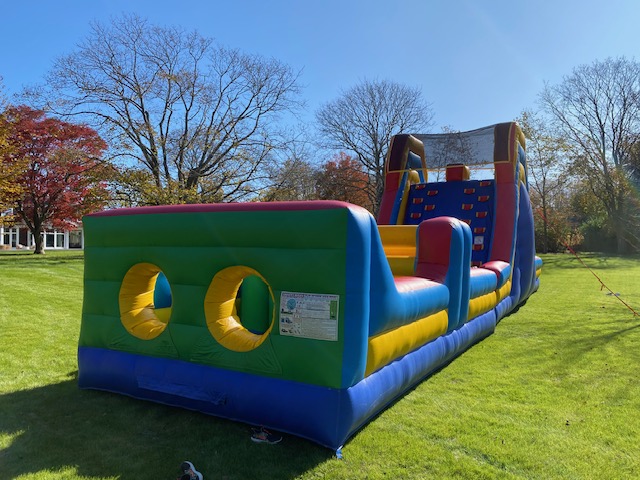
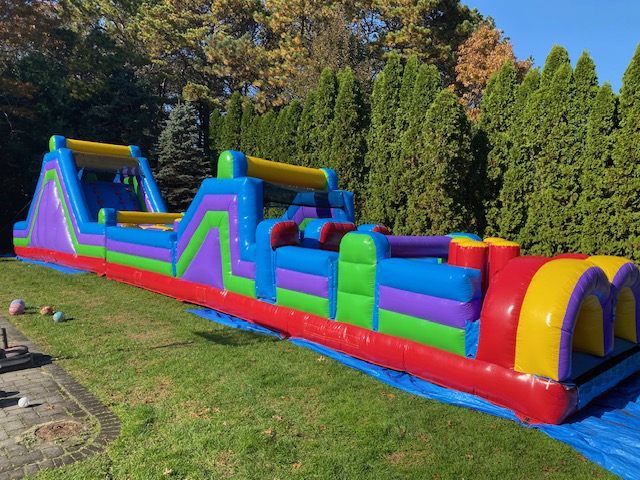
An obstacle course inflatable is one of the most effective single additions you can make to a station-rotation field day. It’s fast, it’s physical, and it works for every grade level because you can adjust how you run it — timed individual runs for competitive upper grades, team cheering for younger ones just trying to get through. You don’t need to staff it heavily if your vendor provides an attendant, which any reputable rental company working a school event should.
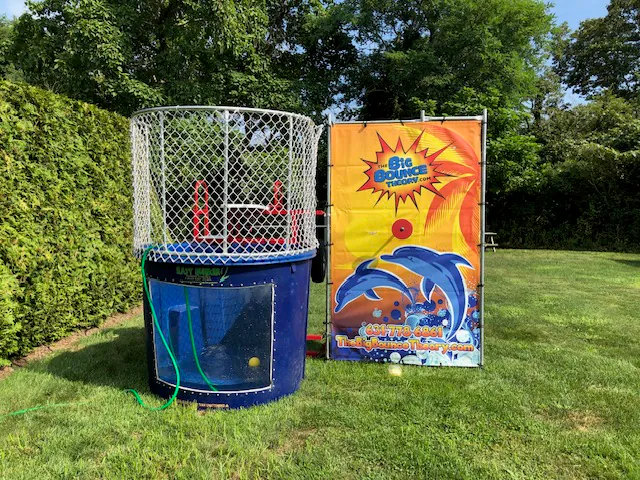
A dunk tank is another one that lands well with older elementary students, especially if a teacher or principal is willing to sit in the chair. For grades three through five, this is often the station with the longest line. It’s simple, it’s hilarious, and it gives kids a moment of pure, joyful chaos in an otherwise structured day.
For schools that want a carnival-style feel, carnival booth games — ring toss, duck pond, bean bag throw — translate naturally into field day stations. They’re self-contained, easy to supervise, and accessible for younger grades who might struggle with more physically demanding activities. Paired with a concession machine for popcorn or snow cones, you get a midway atmosphere that makes the whole event feel like more than just gym class outside.
The mistake most organizers make is trying to rent too much. Pick two or three anchor pieces that genuinely upgrade the experience, build your DIY stations around them, and let the rotation do the work. A well-placed obstacle course and a dunk tank can carry a field day without turning the logistics into a second job.
What Nassau County, NY PTA Organizers Should Know Before Booking a Field Day Vendor
Finding game ideas is the easy part. Vetting a rental vendor for a school event is where a lot of organizers get tripped up — not because the process is complicated, but because most people don’t know what questions to ask until something goes wrong.
Nassau County has specific requirements that apply to any rental company operating on school grounds or in public parks. Knowing what those requirements are before you start making calls will save you a significant amount of back-and-forth — and protect your school from liability if something goes sideways.
What Insurance Requirements Actually Mean for Nassau County School Events
New York State requires inflatable rental operators to carry a minimum of one million dollars in general liability insurance. That’s the floor, and most schools now require proof of it before any vendor sets foot on school property. But the part that catches people off guard is the Certificate of Insurance, or COI — a document that names your school or municipality as an additional insured on the vendor’s policy.
This matters because it shifts liability protection to include your school in the event of an incident. Without it, your school is exposed even if the vendor has their own coverage. Most Nassau County municipalities also require this COI when any rental equipment is set up in a public park, which applies if your field day is at a location like Eisenhower Park in East Meadow, NY or one of the town parks in Wantagh, NY, Seaford, NY, or Merrick, NY.
When you call a vendor, ask directly: “Can you provide a Certificate of Insurance that names our school as an additional insured?” A company that regularly works school events in Nassau County will know exactly what you’re asking for and be able to provide it without any confusion.
Workers’ compensation insurance is the other piece most organizers forget to ask about. If a delivery or setup employee is injured on school grounds and the company doesn’t carry workers’ comp, your school could be on the hook. It’s worth a direct question on that one too.
How Far in Advance Do You Need to Book a Field Day Vendor in Nassau County, NY?
Earlier than you think. Nassau County’s field day season runs heavily through May and June, which also happens to be peak party season on Long Island. Popular vendors — the ones with the right insurance, commercial-grade equipment, and trained attendants — fill their calendars fast during that window.
If your field day is in late May or June, you should be reaching out to vendors in January or February. March is workable but you’ll have less flexibility on dates and equipment selection. April is when you start hearing that dates are already booked. By May, you’re calling everyone on the list hoping something opened up.
The schools that consistently pull off the best field days tend to be the ones that lock in their vendor early and spend the remaining months focused on the logistics they can actually control: volunteer coordination, permission slips, station assignments, and weather contingency plans.
Long Island averages real rain in May and June. Ask your vendor upfront what their policy is on weather-related rescheduling. A company with a clear, fair answer to that question before you book is a much better partner than one that gets vague when the topic comes up.
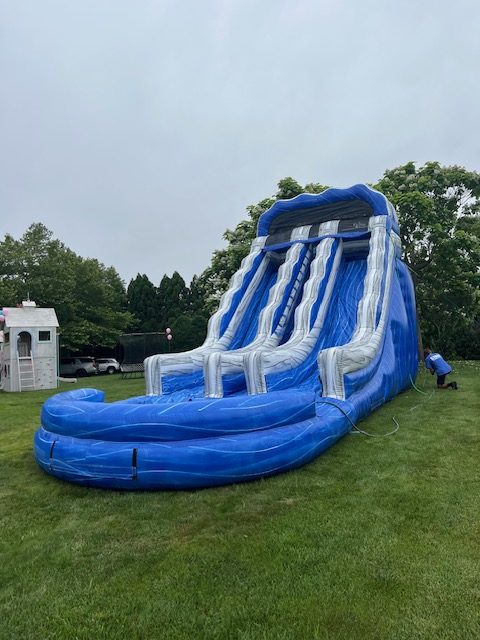
Equipment quality is also worth asking about directly. Commercial-grade inflatables are built to higher safety and durability standards than residential units — and the difference matters when three hundred students are cycling through a bounce station over the course of a school day. Ask whether the equipment is commercial-grade, how recently it was purchased, and whether it’s cleaned between rentals.
Planning a Field Day That Nassau County Kids Actually Remember
A great elementary field day comes down to a few things: activities that work for every grade level, a rotation format that keeps things moving, and vendors who show up prepared and don’t create more work for your volunteer team.
The station model gives you the structure. The right mix of classic games and a couple of well-chosen rental upgrades gives you the energy. And vetting your vendors carefully — insurance, equipment quality, attendants included — gives you the peace of mind to actually enjoy the day instead of managing it from a place of anxiety.
We work school events across Nassau County regularly and know what it takes to make the logistics simple so the fun part can actually be fun. If you’re planning a field day and want to talk through what makes sense for your school’s space, budget, and grade levels, we’re a good place to start.