Summary:
If you’re the PTA chair who just got handed the school carnival, congratulations — and also, we’re sorry. It’s one of the most rewarding events you can throw for your school community, and one of the most logistically demanding. You’re managing volunteers, coordinating vendors, satisfying school administrators, and trying to make sure the whole thing actually generates money for the school. All while holding down everything else in your life.
The good news is that with the right framework and the right vendors, a Nassau County school carnival doesn’t have to be a months-long headache. Here’s how to approach it.
PTA Fundraiser Ideas: Why the School Carnival Still Wins
Book fairs, fun runs, and online donation drives all have their place. But the school carnival consistently outperforms them on one dimension that matters most to a PTA: community engagement. Families show up, kids stay for hours, and the event becomes something people talk about and look forward to year after year.
The fundraising potential is real, but it doesn’t happen automatically. The carnivals that generate meaningful surplus are the ones where the planning started early, the entertainment kept kids moving, and the concessions were treated as a revenue line — not an afterthought. Done right, a well-run school carnival can become one of your district’s most anticipated annual traditions.
School Event Planning: How to Build Your Timeline
The single most common mistake Nassau County PTAs make is underestimating how early they need to start. Spring carnivals — the ones that fall in that May through mid-June window before school lets out — are the most popular, and the best vendors book up fast.
If your event is in May or June, you should be locking in your rental company by late February or early March at the latest. Popular dates go earlier than that. Start with your school calendar. Confirm the date with your principal, check for conflicts with testing schedules and competing community events, and nail down your venue.
If you’re using school grounds, that’s relatively straightforward. If you’re planning to use a Nassau County park — Eisenhower Park in East Meadow is one of the most commonly used large-event venues in the county — you’ll need to factor in the park’s permit process, which takes time.
Eight to twelve weeks out is when your committee work really begins. This is when you’re forming subcommittees, setting your budget, confirming your vendor list, and starting to build your volunteer sign-up structure. Ten weeks before the event, you should have your entertainment vendor confirmed and your Certificate of Insurance paperwork in motion — more on that below.
Four weeks out, you’re finalizing logistics: setup maps, volunteer assignments, ticket pricing, and concession plans. Two weeks out, you’re confirming delivery times, reviewing your rain date policy with your vendor, and making sure every volunteer knows where to be and when.
The week of the event should feel like execution, not scrambling. If it feels like scrambling, something slipped earlier in the timeline.
One thing worth building into your process from the start: take notes. School carnivals are exactly the kind of event that benefits from detailed documentation passed from one officer to the next. Institutional knowledge walks out the door when your committee turns over, and the next chair shouldn’t have to start from scratch.
Nassau County Permit and Insurance Requirements for School Carnivals
This is the part most first-time organizers don’t find out about until a school administrator asks for documentation they’ve never heard of. Getting ahead of it early will save you real stress.
In New York State, any company operating inflatable amusement devices — bounce houses, obstacle courses, slides — is required to hold an annual permit from the Commissioner of Labor. That permit requires the company to submit proof of liability insurance, a valid safety inspection report, and certification that their equipment meets flame resistance standards. This isn’t optional, and it’s not something a legitimate operator will hesitate to provide.
If a vendor can’t confirm they hold this permit, that’s your answer.
Beyond the state requirement, Nassau County park events add another layer. If you’re hosting at Eisenhower Park or any other Nassau County park facility, the park authority typically requires a Certificate of Insurance from your rental vendor — with the park named as an additional insured on that policy. This is a specific document, and it’s different from a general proof of insurance. Your school district may have its own COI requirements as well, particularly if the event is on school property.
The good news is that any experienced Long Island rental company handles this routinely. We process Certificate of Insurance requests naming Nassau County parks and school districts as additional insured regularly — it’s not a special favor or an added complication. What you want to avoid is booking a vendor and then discovering three weeks before your event that they can’t produce the paperwork your principal or district risk manager is asking for.
One more item: if your rental vendor is sending employees onto school property, New York State requires them to carry workers’ compensation insurance. Ask for confirmation of that coverage when you’re vetting vendors. It’s a simple question, and the right answer should come back immediately.
School Carnival Games and Entertainment: What Actually Works
Entertainment selection is where a lot of PTAs make decisions that look good on paper but create problems on the day. The goal isn’t just to have things for kids to do — it’s to have the right mix of activities that keeps a crowd of 300 to 500 kids moving, engaged, and spending tickets across multiple stations simultaneously.
Age range is the first variable. Nassau County school carnivals typically serve K through 8 populations, sometimes wider. A five-year-old and a twelve-year-old have almost nothing in common when it comes to what holds their attention. Your entertainment lineup needs to work for both without creating safety issues when they share the same space.
Bounce Houses vs. Obstacle Courses: Which Is Better for School Carnivals?
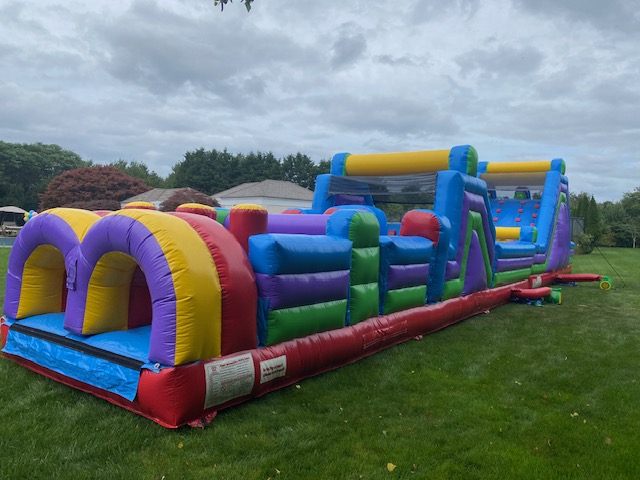
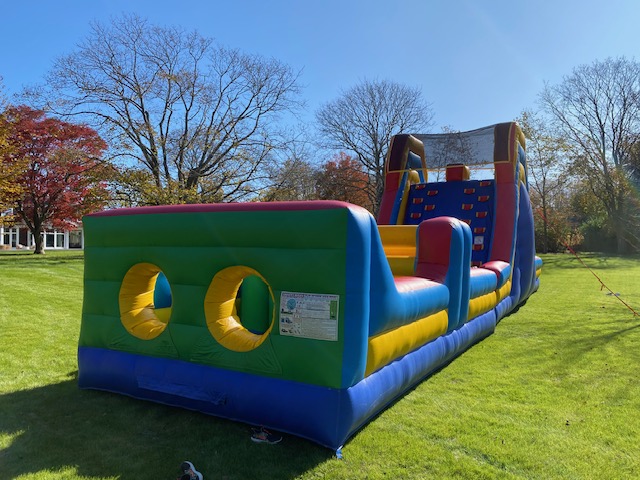
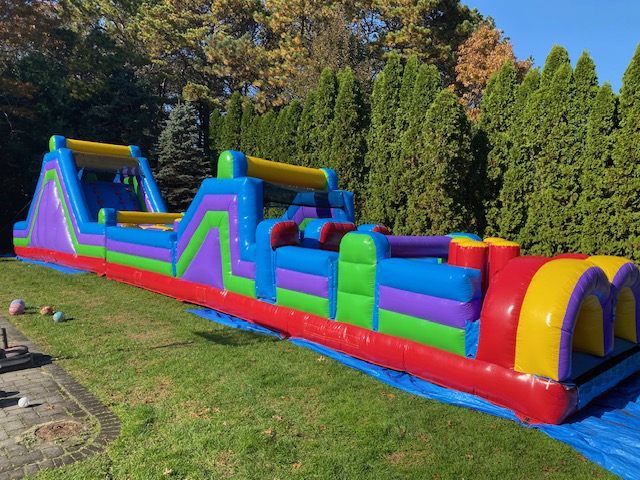
Most PTAs default to bounce houses because they’re familiar. But for large school events, obstacle courses are almost always the better choice — and the reason is simple throughput. A bounce house holds a small group of kids at a time, and the line builds fast. An obstacle course moves children through continuously, which means more kids participate per hour and wait times stay manageable throughout the event.
That doesn’t mean bounce houses have no place at a school carnival. Toddler-safe bounce areas work well if you have a significant younger sibling population attending. But if you’re choosing between one large bounce house and one large obstacle course as your anchor inflatable, the obstacle course will serve your crowd better.
Combo units — inflatables that combine a bounce area with a slide or climbing wall — offer a middle ground that works well for mixed age groups. They add variety without requiring an additional footprint.
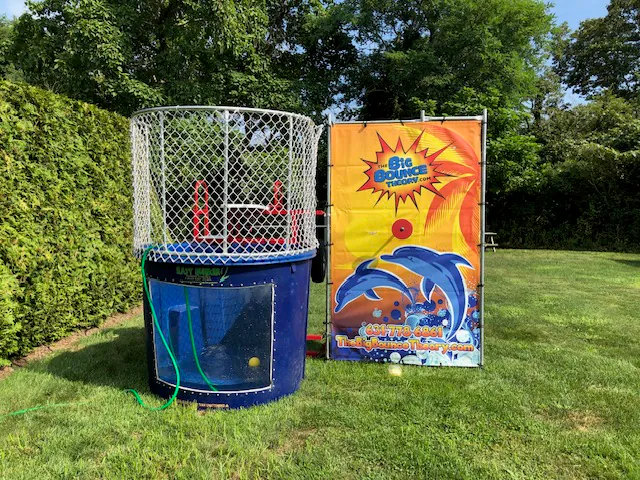
Dunk tanks deserve a mention here because they consistently generate the most energy at school carnivals. Get a teacher or the principal in the hot seat and you’ve created a moment that kids will talk about for weeks. They’re also relatively compact, which makes them easy to fit into a school grounds layout.
For older kids, interactive games — arcade machines, head-to-head competitive games, claw machines — hold attention in a way that passive inflatables don’t. These aren’t just filler; they’re destination stations that give middle schoolers a reason to stay engaged rather than drift to the edges of the event.
The key is variety. A well-designed school carnival gives every age group at least two or three things that feel made for them, rather than a single inflatable that’s technically appropriate for everyone and genuinely exciting for no one.
Concession Machines and Carnival Booths: Turning Entertainment Into Revenue
Concessions are where a lot of PTAs leave money on the table. Food and drink feel like a logistical necessity — something you have to provide — rather than a revenue opportunity. But the math is actually quite favorable if you approach it intentionally.
Cotton candy machines are the clearest example. One PTA organizer reported that adding a rented cotton candy machine turned their concession operation from break-even to generating $200 to $400 in profit that simply didn’t exist before. The machine cost them a rental fee; the margin on the product more than covered it. Popcorn and snow cone machines work similarly. These aren’t complicated to operate, they don’t require a commercial kitchen, and kids will spend tickets on them all day.
Carnival game booths work on the same principle. Each booth is a ticket transaction — kids spend to play, and the prize cost is a fraction of the ticket revenue if you’ve priced it correctly. The engagement factor matters here too. Games that feel unique or slightly unexpected generate more traffic than standard ring-toss setups that kids have seen at every event. We carry carnival games that aren’t available from other vendors on Long Island, which means your event has something attendees can’t compare to last year’s carnival at a different school.
The broader point about concessions and games is that they should be planned as part of your fundraising model, not bolted on as an afterthought. Set ticket prices before the event, estimate your per-station revenue, and build a budget that shows how the event pays for itself and generates surplus. A school carnival that breaks even isn’t a success — it’s a lot of volunteer hours for nothing. The events that actually move the needle for a school’s PTA budget are the ones where someone did that math in advance.
One practical note on cash handling: industry experience consistently shows that cash at carnival events creates risk — not because of bad intentions, but because of volume and chaos. A pre-purchased ticket system, where families buy tickets in advance or at a central booth, reduces cash handling at individual stations and makes reconciliation at the end of the day far cleaner.
Ready to Start Planning Your Nassau County School Carnival?
The PTAs that pull off the best school carnivals on Long Island aren’t the ones with the biggest budgets — they’re the ones that started early, asked the right questions, and worked with vendors who understood what a school event actually requires. Insurance documentation, attendant supervision, equipment that holds up for five straight hours of heavy use, and a rain policy that doesn’t leave you stranded — these things matter more than any individual piece of equipment.
If you’re in the early stages of planning and want to talk through what a full carnival setup looks like for your school’s specific size and venue, we’re happy to walk through it with you. We’ve been doing this on Long Island since 2007, and we know Nassau County’s parks, school districts, and spring event calendar well enough to give you real guidance — not a generic quote.
Reach out to The Big Bounce Theory when you’re ready to get started. The earlier you call, the better your options.