Summary:
Nassau County backyards are not known for being sprawling. If you’ve ever measured your yard and quietly crossed a full-size bounce house off the list, a mini bounce house is probably what you’re actually looking for — and it delivers the same energy in a fraction of the footprint.
But before you book anything, two questions tend to trip people up: what should this cost, and what am I actually signing when I agree to a rental contract? Those are the right questions to ask. This page answers both of them, plainly — so you can make a smart decision and get back to planning the party.
Inflatable Rental Prices: What You're Actually Paying For
Most rental companies don’t publish prices online, which is frustrating when you’re trying to compare options without committing to a sales call. The national average for a bounce house rental lands around $240, with most standard rentals in the Northeast falling somewhere between $150 and $300 for a four-to-eight-hour window. Mini bounce houses often come in at the lower end of that range, but the number alone doesn’t tell you much.
What actually drives the price is the type of unit, how far we’re delivering, whether setup and teardown are included, and the time of year you’re booking. A mini bouncer for a backyard birthday in Levittown on a Saturday in July is going to be in higher demand than the same unit on a Wednesday in October — and pricing reflects that. Delivery distance, generator rental if you don’t have an accessible power outlet, and any add-ons like concession machines or tents all factor in too.
Moon Bounce Rental Prices on Long Island: Why the Name Changes but the Product Doesn't
If you grew up on Long Island or in Nassau County, you probably call it a moon bounce. Someone who moved here from the Midwest calls it a bounce house. Your neighbor from England calls it a bouncy castle. These are all the same thing — and if you’re searching any of those terms while trying to figure out what a rental should cost, you’re going to get a mix of results that can make pricing feel inconsistent.
It’s not. The variation in what you see quoted online comes down to unit size, rental duration, and the quality of the equipment — not the name. A commercial-grade mini moon bounce from a licensed, insured company is going to cost more than a consumer-grade unit from someone running a side operation out of their garage. That gap exists for a reason.
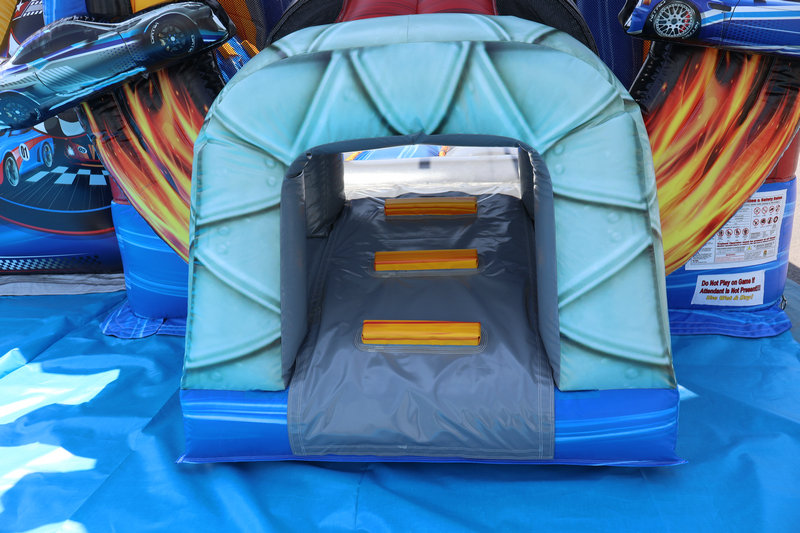
Commercial-grade inflatables are built from heavy-duty PVC vinyl with reinforced seams, built-in safety nets, entrance ramps, and proper anchoring hardware. Consumer units — the kind you’d find at a big-box store — are lighter, wear out faster, and are not designed to handle a birthday party’s worth of kids cycling through them all afternoon. When you’re comparing moon bounce rental prices and one quote looks significantly cheaper than the rest, it’s worth asking what you’re actually getting.
We only purchase new commercial-grade inflatables — most of our inventory is new or less than a year old. That’s not a marketing line; it’s a real cost that shows up in the quality of what gets delivered to your driveway in Rockville Centre or your church hall in Garden City. It also shows up in the fact that the unit looks clean, bounces properly, and doesn’t arrive with patched seams and a faint smell of mildew.
Peak season in Nassau County runs from late spring through early fall, and popular weekends — Memorial Day, Fourth of July, Labor Day — book out fast. If you’re planning a summer party in Merrick or East Meadow, two to four weeks of lead time is a reasonable minimum. Waiting until the week before puts you at risk of limited availability and fewer options on unit selection.
What's Included in a Mini Bounce House Rental — and What Costs Extra
This is where a lot of first-time renters get surprised, and it’s worth understanding upfront. Delivery and setup are often included in the quoted price, but not always — and teardown and pickup are sometimes treated separately. Before you book, confirm that the price covers the full cycle: delivery, inflation and setup, operation during your event window, and breakdown and pickup at the end.
Generator rental is a common add-on that catches people off guard. If your setup location — a park, a large backyard without a nearby outlet, or a community space — doesn’t have accessible power, you’ll need a generator. That typically adds $100 to $120 or more to the total. It’s not a hidden fee if you ask about it upfront, but it’s easy to forget.
For events at Nassau County parks — Eisenhower Park in East Meadow, Hempstead Lake State Park, Christopher Morley Park in North Hills, or any of the town parks run by Hempstead, Oyster Bay, or North Hempstead — you’ll also need to account for permit requirements. Many of these parks require a permit for inflatable use and a Certificate of Insurance from your rental company, with the park or venue listed on the COI. We carry full liability insurance and workers’ compensation, and we can issue a COI with your venue’s name on it. If your rental company can’t do that, you may not be able to use them at a public park at all.
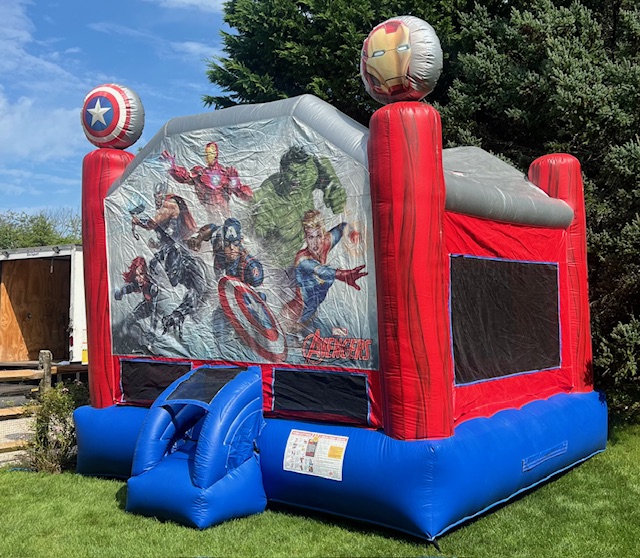
Themed units — licensed Disney Princess, Frozen, Spider-Man, Toy Story — are often the same price as standard designs, but availability is limited. If your child has a specific theme in mind, that’s another reason to book early rather than waiting to see what’s left.
Inflatable Rental Contracts: What to Read Before You Sign
A rental contract is not just paperwork. It’s the document that determines what happens if it rains, what you’re responsible for if something gets damaged, and whether you get your deposit back if you need to cancel. Most people skim it or skip it entirely — and then feel blindsided when something unexpected happens.
A fair, professional rental contract should be easy to read and cover a handful of specific things clearly. If it doesn’t, that’s worth paying attention to before you hand over a deposit.
What a Legitimate Bounce House Rental Agreement Should Cover
The core of any rental agreement is the rental window — what time the equipment arrives, when it needs to be ready for pickup, and what the pricing covers within that window. That seems obvious, but vague language around delivery windows (“sometime in the morning”) is a red flag. You want a specific arrival window, especially if you’re coordinating a party start time around it.
Deposit and cancellation terms should be spelled out clearly. What percentage is due at booking? Is the deposit refundable if you cancel? Is there a minimum notice window to cancel without penalty? These details matter, and a company that won’t put them in writing is a company that reserves the right to make up the rules later.
Damage policy is another section worth reading carefully. Standard contracts hold the renter responsible for damage caused by misuse — overcrowding the unit, allowing sharp objects inside, or operating it in weather conditions the company advised against. That’s reasonable. What’s not reasonable is a contract that holds you liable for normal wear or pre-existing damage. Check whether the company documents the condition of the unit at delivery and pickup.
The safety and use rules section should outline weight limits, age recommendations, maximum occupancy, and supervision requirements. These aren’t just liability shields — they’re the guidelines that keep kids safe. A company that can’t explain these rules or doesn’t include them in the contract hasn’t thought seriously about safety.
We’ve been doing this since 2007 and we’ve watched a lot of companies come and go — some of them changing their name after accumulating bad reviews, others disappearing after a bad season. Our rental agreements are written to be clear, not to trap you. If you have a question about what something means before you sign, ask. That’s the right move.
Weather Cancellation Policies for Nassau County Inflatable Rentals
This is the question Nassau County families ask more than almost any other, and for good reason. Long Island weather is genuinely unpredictable. A sunny forecast on Monday can turn into a nor’easter by Saturday, and with the Atlantic on one side and the Sound on the other, coastal winds can hit 20 to 30 mph on a day that looks perfectly clear on paper.
Most reputable inflatable rental companies will not set up in rain or sustained winds above 15 to 20 mph. That’s not a preference — it’s a safety requirement. An inflatable operating in high wind is a serious hazard, and any company that tells you otherwise is not a company you want handling your event. The question isn’t whether there’s a wind cutoff; it’s what happens to your booking when conditions cross that line.
A good weather policy gives you options. Rescheduling to a future available date is the most common outcome when weather forces a cancellation. What you want to avoid is a contract that keeps your deposit regardless of circumstances and offers no path to rescheduling.
For events in Nassau County communities like Bellmore, Lynbrook, Baldwin, or anywhere near the South Shore, it’s worth asking your rental company specifically what their wind threshold is, who makes the call on cancellation, and what the rescheduling process looks like. Get that in writing before you book. A company that’s been operating professionally for years will have a clear, consistent answer. One that hedges or gets vague is telling you something.
We’re SIOTO members — the Safety Inflatable Operators Organization — and our operations follow ASTM F2374, the national safety standard for commercial inflatable amusement devices. That means our weather policies aren’t made up on the spot; they’re grounded in actual industry safety guidelines. When we say we won’t set up in unsafe conditions, it’s because we’ve been trained on what unsafe actually looks like.
Ready to Book a Mini Bounce House in Nassau County?
If your yard in Mineola is on the smaller side, or you’re planning an indoor party at a church hall in Valley Stream, a mini bounce house is the right call — not a compromise. The same commercial-grade quality, the same safety standards, just sized for the space you actually have.
Understanding what drives rental pricing and knowing what to look for in a contract puts you in a much better position than most people who call around and just go with whoever answers first. Ask about what’s included, ask about the weather policy, and ask whether we can provide a COI if your venue requires one.
We’ve been serving Nassau County families, schools, and community events since 2007. If you’re ready to get a date on the calendar, reach out and we’ll take it from there.